Our Glossary
Glossary
A list of vocabulary to help families understand terms or words used when talking about Mental Health and Special Educational Needs and Disabilities (SEND).
A
Advocacy: The process by which parents actively support and promote their child’s rights and needs within education and health systems.
B
Burnout: A state of emotional, mental, and physical exhaustion caused by prolonged stress, especially common in caregivers.
C
CAMHS: Child and Adolescent Mental Health Services – NHS services that assess and treat young people with emotional, behavioural, or mental health difficulties.
Caregiver Fatigue: Physical and emotional exhaustion from prolonged caregiving without sufficient rest or support.
Children and Families Act 2014: A key piece of legislation setting out duties for local authorities regarding children and young people with SEND.
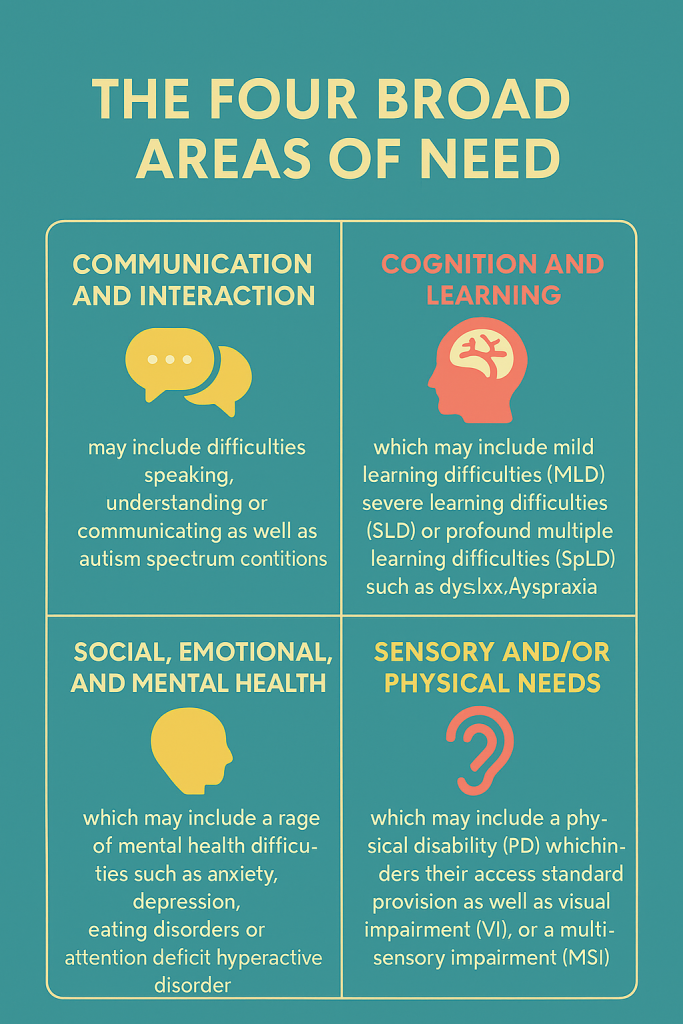
Cognition and Learning: One of the four areas of SEND, involving difficulties in understanding, memory, and learning skills.
Communication and Interaction: A category of SEND covering challenges with speech, language, and social interaction.
D
Disability Living Allowance (DLA): A benefit that helps with the extra costs of caring for a child with a disability.
E
Early Intervention: Actions taken at an early stage to identify and address developmental concerns to reduce long-term negative outcomes.
EHCP (Education, Health and Care Plan): A legal document outlining the support a child with significant SEND needs will receive across education, health, and care sectors.
ELSA (Emotional Literacy Support Assistant): Trained school staff who support children in understanding and managing their emotions.
Emotional Literacy: The ability to recognize, understand, and appropriately express emotions.
Emotional Regulation: The ability to manage and respond to emotional experiences in a healthy way.
Empowerment: Supporting parents and children to feel confident, informed, and capable of making decisions and advocating for their needs.
Equality Act 2010: Legislation that protects individuals from discrimination, including on the basis of disability.
F
Family Wellbeing: The collective emotional and mental health of all family members, which can be impacted by stress, support, and caregiving demands.
G
Growth Mindset: The belief that abilities and intelligence can be developed through effort, good strategies, and help from others.
i
Inclusion/Inclusive Teaching: Educational practices designed to support all learners, including those with SEND, within mainstream settings.
L
Local Offer: Information provided by local authorities about available services and support for children with SEND and their families.
M
Mainstream School: A regular school that includes students with and without SEND, often with additional support.
Mental Health: Emotional, psychological, and social wellbeing; particularly important in children with SEND who are more vulnerable to anxiety, depression, and isolation.
N
Nurture Groups: Small groups within schools providing additional emotional and social support for children.
O
Occupational Therapy (OT): Support focused on helping children develop the skills needed for daily living and participation in school and social activities.
P
Peer Mentoring: Support from other students to help children with SEND navigate social or academic challenges.
Positive Reinforcement: Encouraging desired behaviour by rewarding it, promoting confidence and skill-building.
Psychoanalyst: A specialist trained in psychoanalysis, a therapeutic approach that explores unconscious patterns and early life experiences. Psychoanalysts typically undergo extensive training and their own psychoanalysis.
Psychiatrist: A medical doctor who specialises in diagnosing and treating mental health conditions. Psychiatrists can prescribe medication and may also provide therapy.
Psychologist: A professional trained in human behavior and mental processes. Psychologists assess and support emotional, cognitive, and behavioural difficulties. Clinical psychologists may provide therapy but cannot prescribe medication.
Psychotherapist: A trained professional who treats emotional and mental health conditions through talk therapy. They may use various approaches (e.g., CBT, psychodynamic therapy) and typically work long-term with clients.
Provision (Universal, Targeted, Specialist):
-
- Universal: Available to all students.
- Targeted: Tailored for small groups or individual students with emerging needs.
- Specialist: Intensive support from professionals for complex needs.
R
Resilience: The ability to cope with challenges and bounce back from adversity.
Respite Care: Temporary relief for caregivers, giving them time to rest and recharge.
S
Safeguarding: Protecting children from harm, abuse, and neglect.
Scaffolding Independence: Providing support that gradually decreases as a child builds skills and confidence.
SEMH (Social, Emotional, and Mental Health Needs): A category of SEND describing children with difficulties in managing emotions, relationships, and behaviour.
SEND (Special Educational Needs and Disabilities): A term describing a wide range of learning, behavioural, and physical needs requiring additional support.
SEND Code of Practice (2015): Government guidance for schools and local authorities on supporting children with SEND.
SENDIASS: Special Educational Needs and Disability Information, Advice and Support Services – provides impartial guidance to families.
SENCO (Special Educational Needs Coordinator): A teacher responsible for coordinating SEND support within schools.
Sensory and/or Physical Needs: One of the four categories of SEND, including sensory processing challenges and physical disabilities.
Speech and Language Therapy (SaLT): Services that support communication, speech development, and swallowing needs.
T
Transition: A change in a child’s educational or life stage (e.g., moving from nursery to primary school), often a time of increased stress or anxiety.